Blends & Stacks
Pre-formulated peptide combinations for targeted research protocols — fat loss, GH, and recovery stacks.
Compounds in This Category

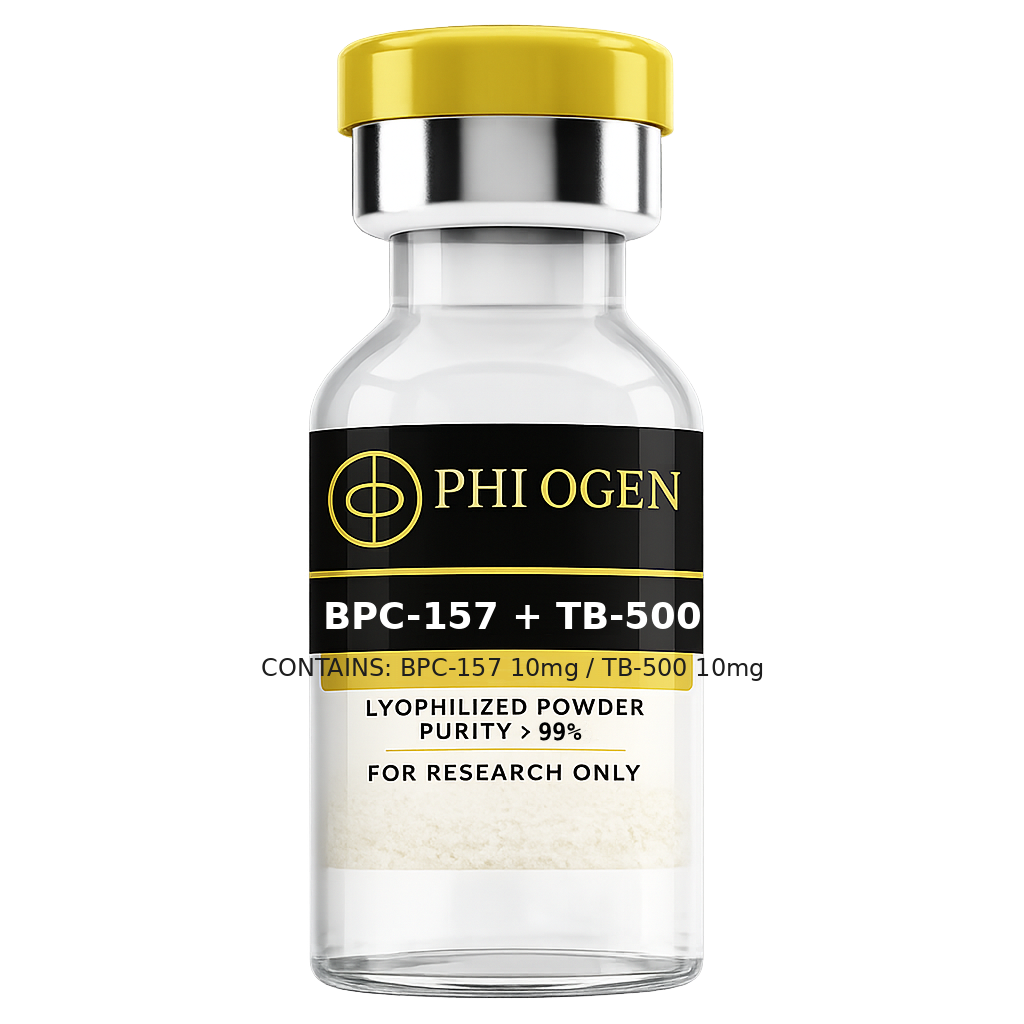
BPC-157 + TB-500 Blend 20mg
BPC-157 10mg + TB-500 10mg dual-mechanism blend. VEGFR2 local repair paired with G-actin systemic cell migration. 20mg total. 99.0% purity.
$99.99

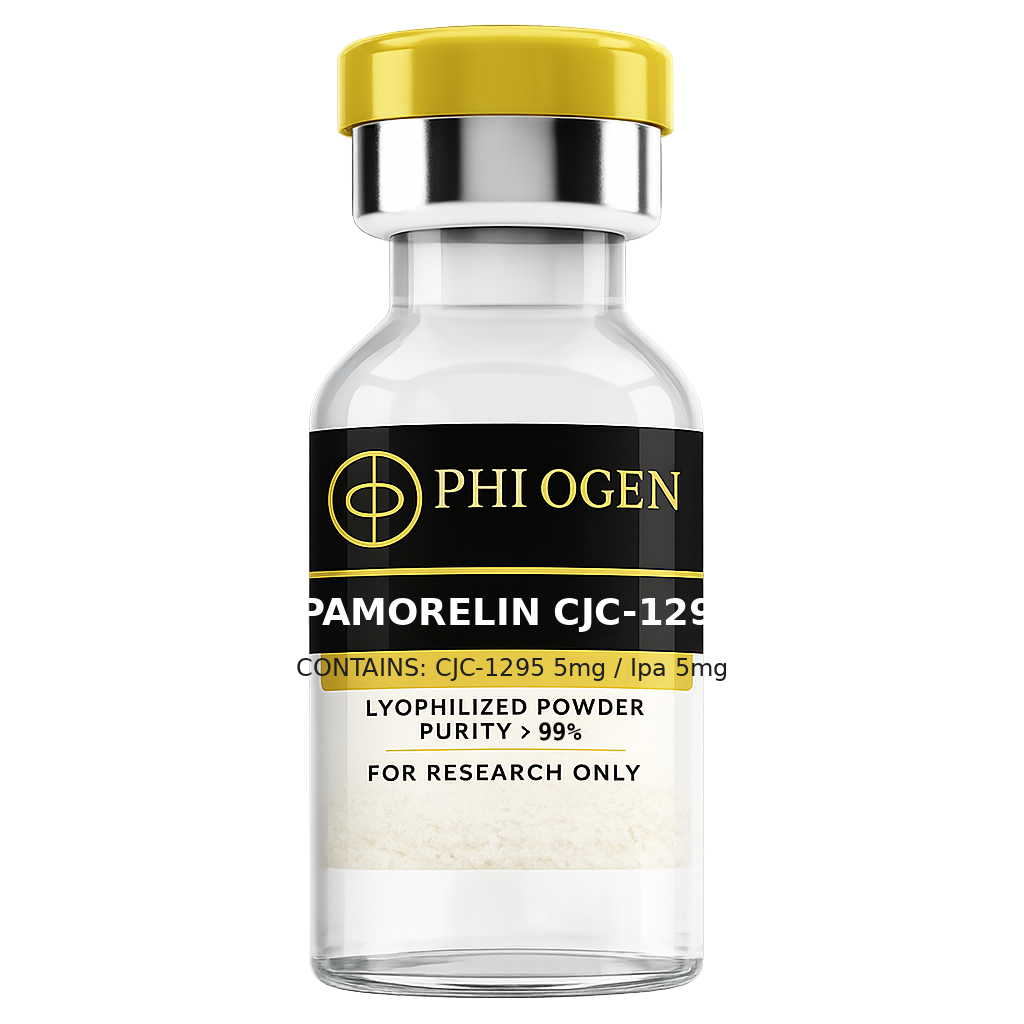
Ipamorelin/CJC-1295 Blend 10mg
Ipamorelin 5mg + CJC-1295 No DAC 5mg pre-formulated blend. 99.0% purity. Combines GHRH-receptor activation with ghrelin-receptor agonism for synergistic GH pulse amplification.
$89.99

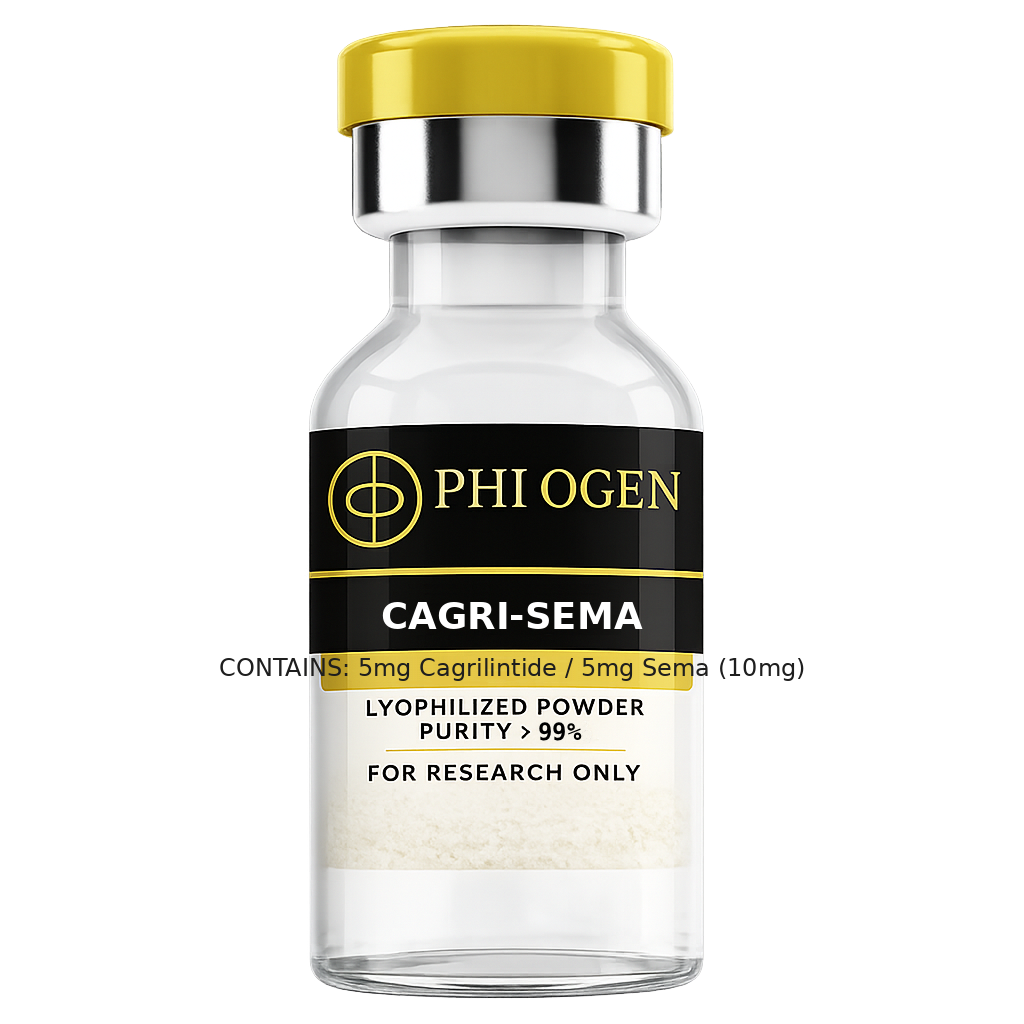
Cagri-Sema Blend 10mg
Pre-formulated Cagrilintide 5mg + Semaglutide 10mg blend. 98.7% purity. CagriSema Phase 2: −15.6% weight loss at 32 weeks; dual amylin + GLP-1 pathway co-activation in single vial.
$179.99
Pre-Formulated Peptide Blends: Rationale and Evidence
Peptide blends co-formulate two or more compounds in a single vial at defined ratios. The rationale for pre-blending is not commercial convenience alone — it rests on documented mechanistic complementarity between the components. Each combination discussed here has a published research basis for the pairing.
Recovery Stack: BPC-157 + TB-500
The BPC-157/TB-500 combination is the most extensively studied peptide pairing in recovery-focused research. Sometimes referred to informally as the Wolverine Stack, the rationale is precise.
Why These Two Together
BPC-157 and TB-500 operate through non-overlapping primary mechanisms:
- BPC-157: VEGFR2-driven angiogenesis, FAK-Paxillin cell migration, NO-system mucosal repair — primarily local in distribution
- TB-500: G-actin sequestering driving F-actin polymerisation and cell motility — systemically distributed via circulation
Their half-lives differ substantially: BPC-157 approximately 4 hours; TB-500 approximately 10 days. A standard protocol thus doses BPC-157 daily or twice daily while TB-500 is dosed 1–2× per week. Pre-blending in a single vial with a 1:1 ratio covers the acute BPC-157 signalling event while co-delivering the weekly TB-500 dose — simplifying reconstitution and administration without altering the individual compound pharmacology.
Typical Protocol
Loading phase: 5 mg BPC-157 + 5 mg TB-500 twice weekly for 4 weeks. Maintenance: 2.5 mg each weekly thereafter. Timing is flexible — no known food or fasting interaction.
GH Secretagogue Stack: Ipamorelin + CJC-1295
The dual GH secretagogue blend combines GHRH-receptor stimulation (CJC-1295 No DAC) with ghrelin-receptor stimulation (Ipamorelin). The synergy rationale is well-established: the two receptors amplify GH pulse output additively, producing larger secretory events than either compound alone at equivalent doses.
Blend Ratio
A 5 mg CJC-1295 (No DAC) + 5 mg Ipamorelin formulation provides balanced dosing for the standard 100–200 mcg each per pulse. Pre-blending ensures consistent ratio delivery across the protocol.
Protocol Timing
Dosed pre-sleep is the primary research timing — aligning with the natural nocturnal GH pulse. Additional dosing pre-workout or in a fasted morning state is common. Avoiding carbohydrate intake within 90 minutes of administration minimises somatostatin suppression of the GH pulse.
Metabolic Blends: Cagri-Sema and Cagri-Reta
Cagrilintide + Semaglutide (CagriSema)
Cagrilintide is a long-acting amylin analogue; Semaglutide is a GLP-1R monoagonist. Amylin and GLP-1 receptor systems produce central satiety signalling through distinct hypothalamic pathways — combining them engages two non-competing mechanisms simultaneously.
The SCALE NEXT Phase 2 trial tested CagriSema vs its components in head-to-head arms. Results at 32 weeks: −15.6% body weight for CagriSema vs −8.0% for semaglutide alone and −8.1% for cagrilintide alone. Notably, GI tolerability in the combination arm was comparable to or better than semaglutide alone — supporting the mechanistic hypothesis that amylin pathway activation partially attenuates GLP-1-driven GI burden.
Cagrilintide + Retatrutide (Cagri-Reta)
Extending the amylin + GLP strategy to a triagonist backbone. Retatrutide's triple receptor coverage (GLP-1R + GIPR + GcgR) combined with amylin receptor agonism represents the leading edge of multi-target metabolic research. No direct Phase 2/3 head-to-head trial data exists for this combination as of the current evidence base. Mechanistic rationale is sound — four non-overlapping pathways — but trial validation is pending.
What to Watch for with Blends
Blend-specific considerations:
- Ratio appropriateness: Pre-formulated ratios are designed for typical research protocols. Researchers requiring asymmetric dosing (e.g., higher BPC-157 relative to TB-500) may prefer individual vials
- Stability: Peptide blends in a shared solvent must be validated for component stability at the stored concentration. Purity and stability of both components at formulation should be confirmed via COA
- Dose calculation: Each component's dose is drawn from the same volume — verify the concentration/component before administration calculations
Frequently Asked Questions
What is the mechanistic basis for the BPC-157 and TB-500 combination?
BPC-157 acts locally through VEGFR2 angiogenesis, FAK-Paxillin cell migration, and NO-pathway mucosal repair — with a short ~4-hour active window. TB-500 distributes systemically via circulation through G-actin sequestering and F-actin dynamics with a ~10-day half-life. The pathways do not overlap, creating additive rather than redundant coverage. The combination addresses both local precision repair and systemic healing distribution simultaneously.
What did the CagriSema Phase 2 trial actually show?
The SCALE NEXT Phase 2 trial ran CagriSema (cagrilintide + semaglutide) against each component alone. At 32 weeks, CagriSema produced −15.6% body weight vs −8.0% for semaglutide alone and −8.1% for cagrilintide alone. The combination result was roughly double either monotherapy — consistent with two independent satiety pathways being engaged. GI tolerability in the CagriSema arm was not worse than semaglutide alone despite higher overall efficacy.
Why might a researcher choose individual vials over a pre-formulated blend?
Pre-formulated blends deliver fixed component ratios per dose volume. A researcher needing asymmetric dosing — for example, higher-frequency BPC-157 than TB-500, or different component dose escalation timing — requires individual vials to control each compound independently. Blends are optimised for standard protocol structures. Protocols with non-standard component ratios, loading phases that differ by compound, or multi-compound stacks with additional agents are typically better served by separate vials.
What evidence exists for the Ipamorelin/CJC-1295 combination specifically?
The synergy between GHRH analogues and ghrelin receptor agonists is mechanistically established — the two receptor systems have additive effects on somatotroph GH secretion. Direct head-to-head clinical trials comparing the combination vs monotherapy in normal adults are limited. The foundational evidence for each component individually is Phase 1/2 grade. The combination is widely used in clinical GH deficiency protocols based on the mechanistic rationale, but the combination itself lacks a dedicated Phase 3 RCT.
Quick Links
Research Protocols
The Maxxing Stack →Full protocol reference for building a comprehensive peptide stack.
Disclaimer
Research use only. Not for human consumption. All data referenced from preclinical or clinical research literature. Consult a qualified professional before any use.