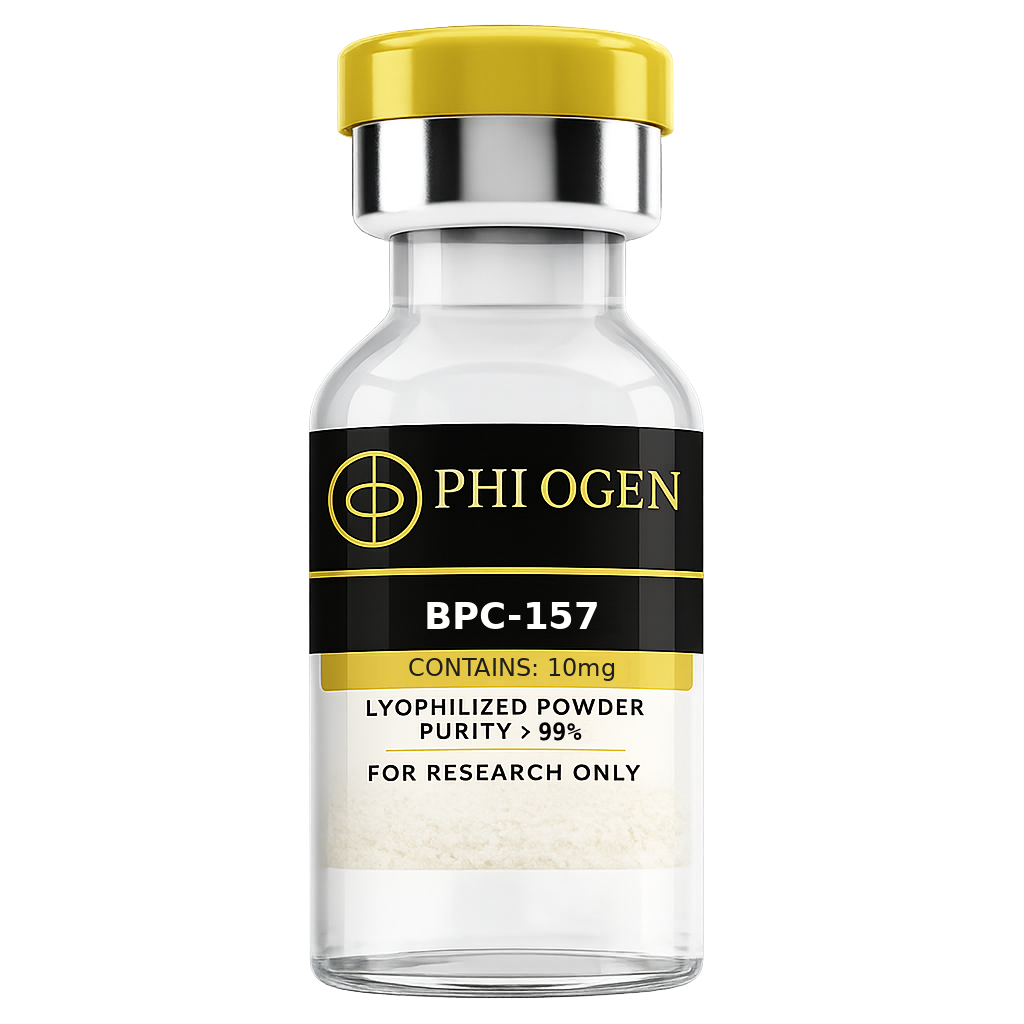
Compound Profile
BPC-157 (Body Protection Compound-157) is a synthetic pentadecapeptide — 15 amino acids — derived via sequence truncation from a cytoprotective protein isolated from human gastric juice. The parent protein was identified in the 1990s by the research group of Sikiric et al. at the University of Zagreb, which has since produced the majority of the indexed preclinical literature.
As of 2026, PubMed indexes over 140 studies involving BPC-157. There are no published human randomised controlled trials. The compound remains unapproved by any major regulatory body.
Six Core Mechanisms
1. VEGFR2 Upregulation and Angiogenesis
The most consistently reported mechanism: BPC-157 upregulates vascular endothelial growth factor receptor 2 (VEGFR2), driving angiogenesis — new capillary formation at injury sites. This is the mechanistic backbone of the tendon and wound healing literature. New vascular supply to avascular or hypovascular tissue (tendons, cartilage) accelerates the nutrient delivery required for repair.
2. FAK-Paxillin Pathway Activation
Focal adhesion kinase (FAK) and its binding partner paxillin govern cell migration, adhesion, and cytoskeletal organisation. BPC-157 activates this pathway, promoting the cell motility required for wound closure and tissue remodelling. This mechanism is relevant to both the dermal wound healing data and the musculoskeletal repair evidence.
3. Nitric Oxide System Upregulation
BPC-157 increases nitric oxide synthase (NOS) activity, elevating NO production. In the gastric mucosa, NO maintains mucosal blood flow, promotes mucus secretion, and supports epithelial tight junctions. This is the primary mechanism behind the gastric ulcer healing evidence — the most replicated finding in the entire BPC-157 literature, with multi-lab replication across ulcer models induced by NSAIDs, ethanol, and cysteamine.
4. NF-κB Pathway Suppression
BPC-157 downregulates nuclear factor kappa B (NF-κB) signalling — a master regulator of the inflammatory response. NF-κB suppression reduces production of TNF-α, IL-1β, and IL-6. This mechanism is cited in inflammatory bowel disease models, arthritis models, and systemic inflammation studies within the preclinical dataset.
5. Dopaminergic and Serotonergic Modulation
A less-studied but indexed finding: BPC-157 influences both dopaminergic and serotonergic transmission. In rodent models, it modulates dopamine synthesis and receptor sensitivity. This is the mechanism basis for the neuroprotection and neurological recovery data — including models of traumatic brain injury and Parkinson's-like dopamine depletion.
6. Growth Hormone Receptor Pathway Interaction
Several bone and muscle repair studies suggest BPC-157 interacts with growth hormone receptor (GHR) signalling, potentially sensitising downstream pathways. This mechanism is less well-characterised than the VEGFR2 or NO system data and carries a lower evidence grade.
Evidence by Body System
| Key Findings | Evidence Grade | Replication | Gastric / GI | Ulcer healing, mucosal repair, cytoprotection | A | Multi-lab, multiple ulcer models |
| Tendon | Achilles repair, VEGF upregulation, collagen organisation | A | Multiple independent groups |
| Muscle | Crush injury recovery, fibre regeneration | B | Primarily Zagreb group |
| Bone | Fracture healing acceleration | B | Limited independent replication |
| Liver | NSAID and alcohol-induced hepatotoxicity protection | B | Multiple rodent models |
| CNS | TBI models, dopamine modulation, neuroprotection | C | Preliminary, limited replication |
| Cardiovascular | Arrhythmia and cardiac injury models | C | Single-group data |
| Intestinal (IBD) | Colitis model repair, tight junction restoration | B | Multi-model evidence |