HPLC Verified
Research Grade
COA Published
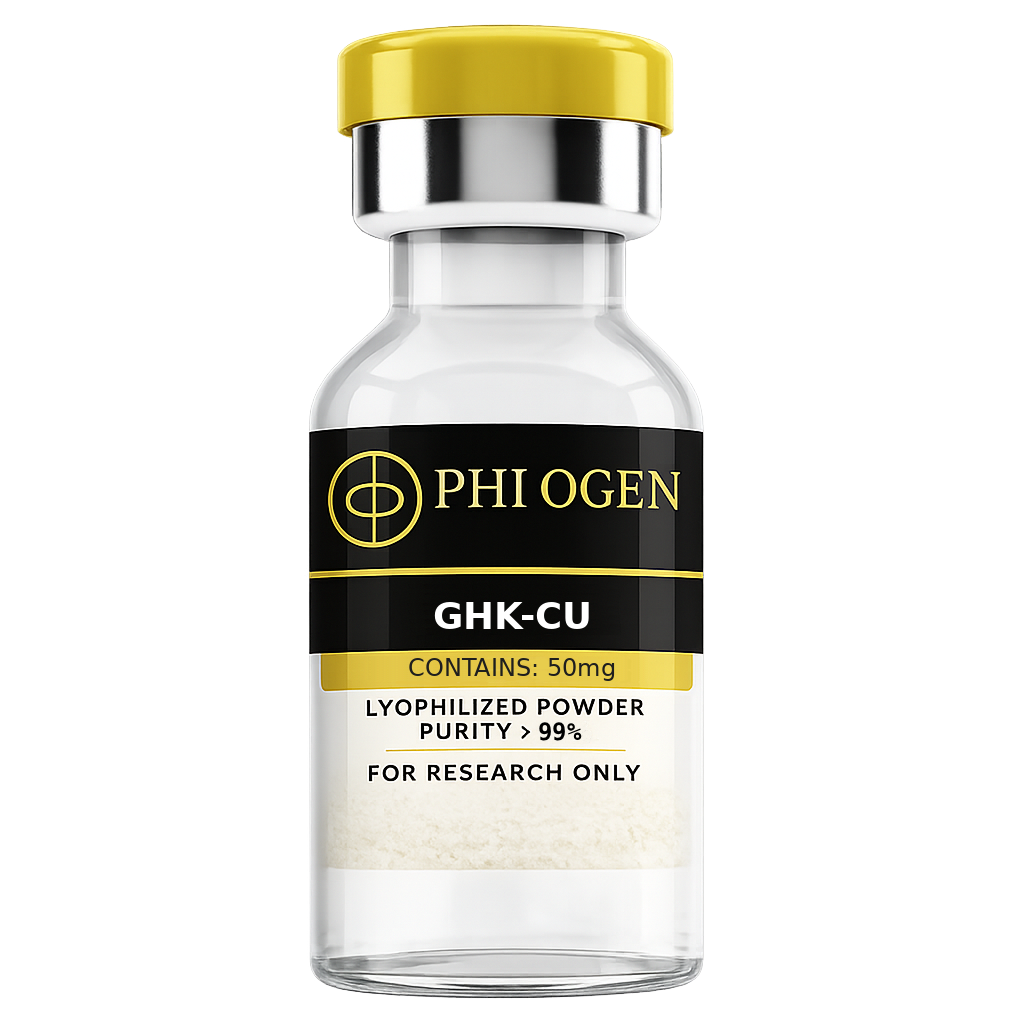
GHK-Cu 50mg
Copper Peptide GHK-Cu
CAS: 49557-75-7
Copper Peptide GHK-Cu — naturally occurring tripeptide modulating 4,000+ genes. Collagen I +70%, elastin upregulation, and antioxidant enzyme expression in fibroblast models.
Price
$50.00
80 in stock
HPLC verified · third-party tested · research use only
Specifications
4,000+ Gene Modulation — Collagen, Elastin, and Antioxidant Pathways
GHK-Cu (Glycyl-L-histidyl-L-lysine copper complex) operates as a global tissue repair signal — a biological property confirmed by the 2012 Broad Institute genomic analysis showing modulation of 4,000+ human genes. The directional pattern is consistent: upregulated genes include collagen I (+70% in fibroblast models), collagen III (+50%), elastin, glycosaminoglycans, and antioxidant enzymes (superoxide dismutase, catalase). Downregulated genes include those associated with inflammation, cellular senescence, and destructive matrix metalloproteinases. This bidirectional genomic signature makes GHK-Cu unique in the aesthetic peptide landscape — it simultaneously builds structural proteins and suppresses the processes that degrade them.
Collagen I +70% in Fibroblast Models
In fibroblast culture studies, GHK-Cu increased collagen I synthesis by 70% and collagen III by 50%. Collagen I is the primary structural protein of skin, tendons, and bone — its decline with age is the principal cause of visible skin thinning and reduced elasticity. GHK-Cu plasma levels decline 60% between age 20 and 60, temporally tracking this structural loss.
Broad Institute Genomic Data
The 2012 Broad Institute analysis identified 4,000+ genes modulated by GHK-Cu — one of the largest gene expression signatures documented for any tripeptide. The upregulation of skin repair genes while simultaneously downregulating senescence and inflammation genes produces an unusually broad anti-aging biological profile.
Wound Healing and Angiogenesis
Beyond cosmetic applications, GHK-Cu has documented wound healing evidence: keratinocyte migration, angiogenesis, and anti-inflammatory effects in dermal wound models. This dual aesthetic + wound healing profile makes it relevant for both looksmaxxing protocols and recovery applications.
Frequently Asked Questions
What does GHK-Cu do for skin?
GHK-Cu upregulates collagen I (+70%), collagen III (+50%), elastin, and antioxidant enzymes while downregulating inflammation and senescence genes. This dual profile — building structural proteins while suppressing their degradation — makes it the foundational skin quality compound in most aesthetic research protocols.
Why does GHK-Cu decline with age?
GHK-Cu is naturally present in plasma, saliva, and urine, where it acts as a tissue repair signal. Plasma concentrations decline from ~200 ng/mL at age 20 to ~80 ng/mL by age 60 — a 60% decline. This reduction correlates temporally with measurable loss of collagen, elastin, and wound healing capacity.
Can GHK-Cu be combined with SNAP-8 and Melanotan II?
Yes — the three compounds work through entirely different mechanisms. GHK-Cu targets systemic skin quality via gene regulation. SNAP-8 targets SNARE-mediated expression lines. Melanotan II targets MC1R for melanogenesis. None compete mechanistically and all three are commonly run as a layered aesthetic stack.
What is the reconstitution protocol for GHK-Cu 50mg?
Add 10mL bacteriostatic water to the 50mg vial for a 5mg/mL concentration. Inject slowly along the vial wall. Swirl gently — do not shake. Store at 2–8°C for up to 28 days. For lower concentrations, scale proportionally (e.g., 25mL water → 2mg/mL).
Related Products
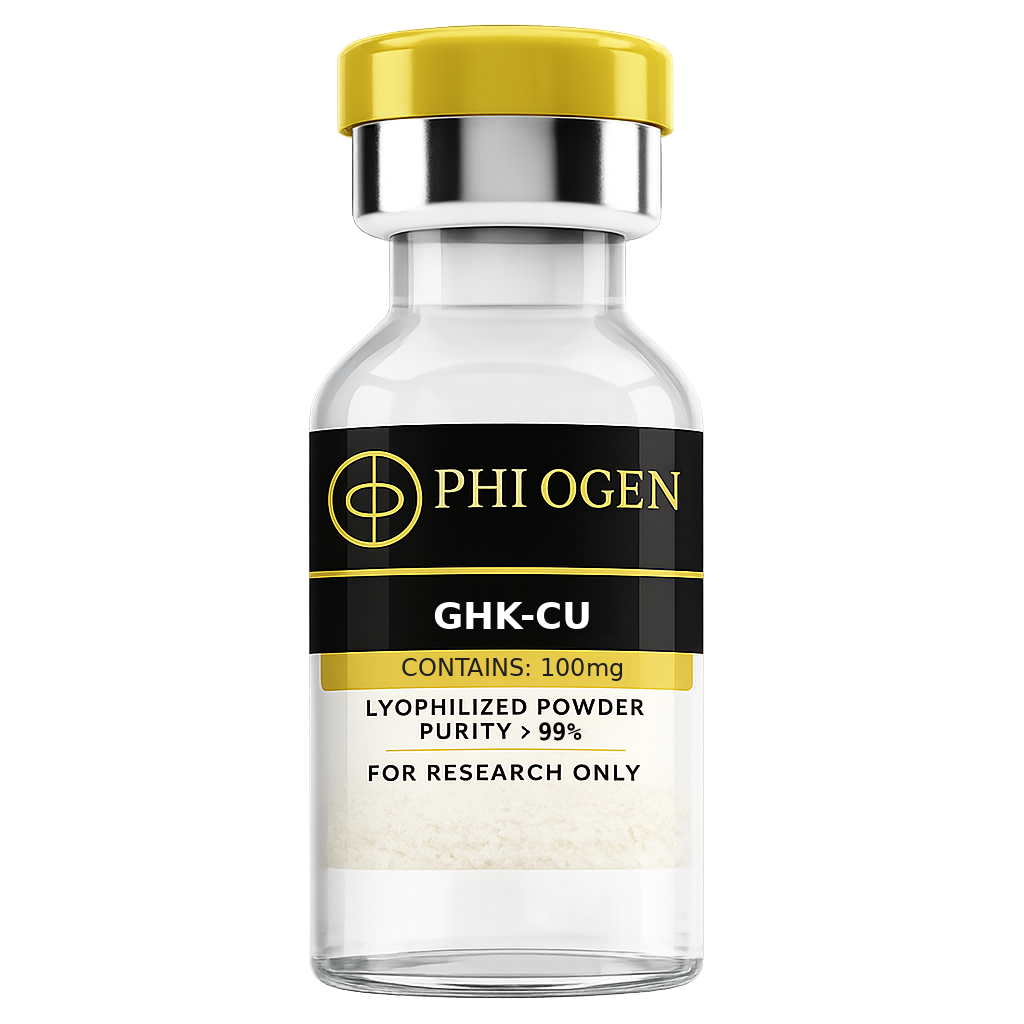
GHK-Cu 100mg
Copper Peptide GHK-Cu
Gly-His-Lys copper tripeptide, 100mg. Collagen I, elastin, and antioxidant enzyme gene modulation across 4,000+ gene targets. Extended research supply. 99.1% purity.
$89.99
CAS 49557-75-7
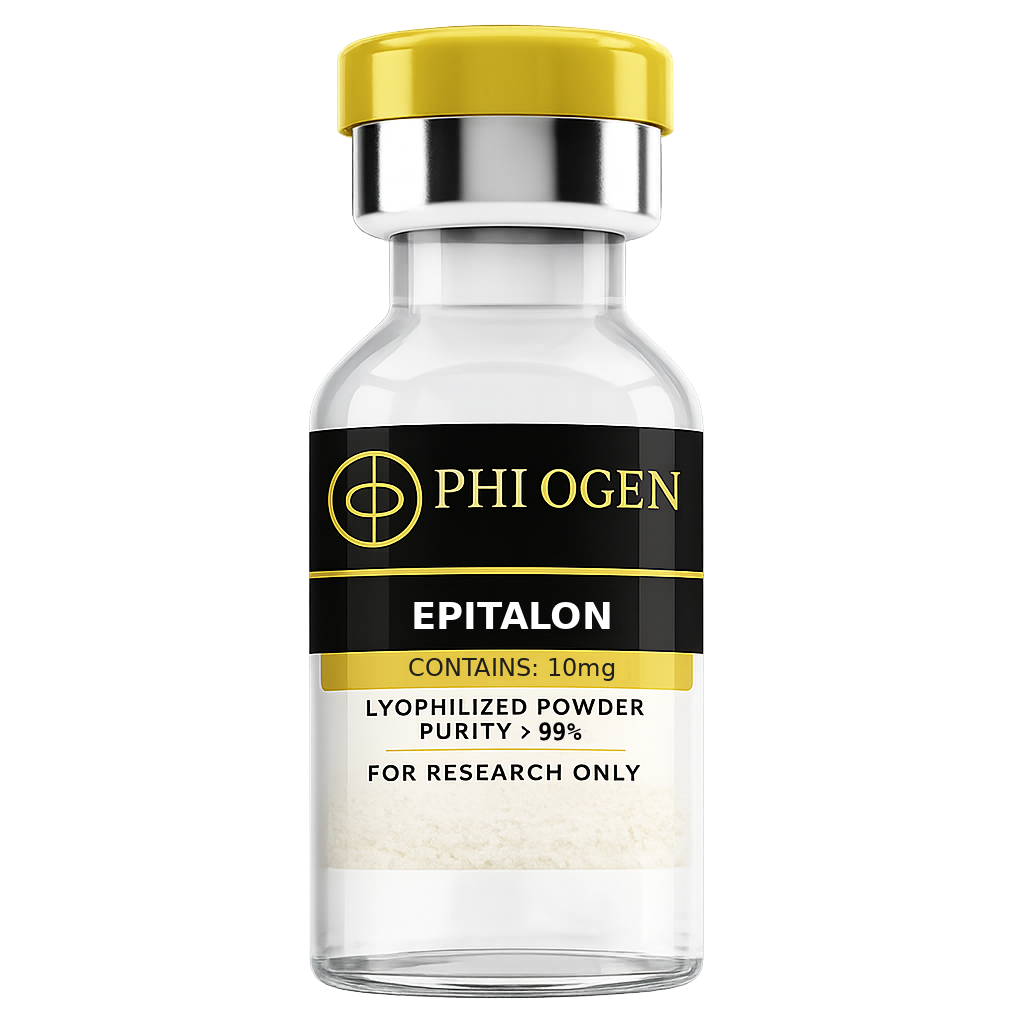
Epitalon 10mg
Epitalon (Epithalon)
Ala-Glu-Asp-Gly tetrapeptide from Khavinson pineal research. Activates telomerase via hTERT induction; melatonin modulation across 50+ years of longitudinal data. 99.2% purity.
$59.99
CAS 307297-39-8
GHK-Cu 50mg
$50.00