The Incretin Agonist Hierarchy
GLP-based compounds for fat loss research fall along a clear receptor-complexity gradient, with each additional receptor adding a distinct mechanism and incrementally larger effect size in trial data. Understanding the receptor pharmacology is prerequisite to selecting the appropriate compound for a specific research objective.
Semaglutide: Single-Receptor Foundation
Receptor target: GLP-1R only
Semaglutide is a GLP-1 receptor agonist with a C18 fatty diacid conjugation that extends its half-life to approximately 7 days (enabling weekly subcutaneous dosing). Its mechanism is exclusively GLP-1R mediated:
- Hypothalamic satiety signalling: GLP-1R in the arcuate nucleus and nucleus tractus solitarius reduces orexigenic signalling and increases anorectic neuropeptide (POMC, CART) activity
- Gastric emptying delay: GLP-1R in the gastric antrum slows food transit, extending postprandial fullness
- Pancreatic beta cell stimulation: Glucose-dependent insulin secretion enhancement
STEP 1 trial (NCT03548935): 2.4 mg/week subcutaneous, 68 weeks, n=1,961 — mean body weight reduction −14.9% vs −2.4% placebo (Wilding et al., NEJM 2021).
Semaglutide represents the entry-level GLP compound — the largest human evidence base, the most regulatory recognition, and the most conservative effect size. Its single-receptor mechanism creates a pharmacological ceiling that dual and triple agonists exceed.
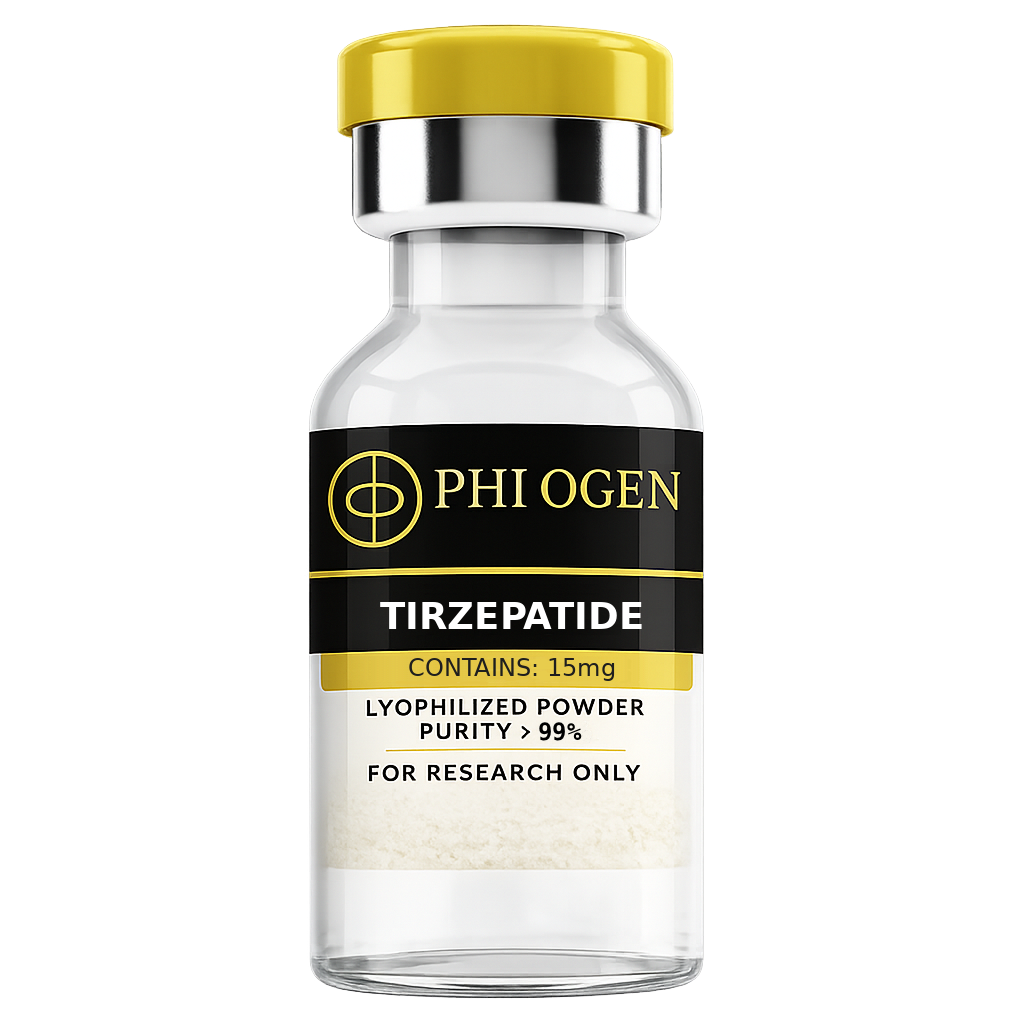
Tirzepatide: Dual-Receptor Step-Up
Receptor targets: GLP-1R + GIPR
Tirzepatide is a unimolecular peptide with engineered differential affinity: approximately equal potency at GLP-1R and GIPR, achieved via a C20 fatty diacid linker and optimised binding sequence. The GIPR addition is mechanistically important:
- Adipose tissue lipid metabolism: GIPR in adipocytes enhances insulin-stimulated glucose uptake and promotes fatty acid oxidation through a cAMP-PKA pathway independent of GLP-1R
- Insulin sensitisation: GIPR agonism improves whole-body insulin sensitivity beyond what GLP-1R alone achieves
- Synergistic satiety: GIPR and GLP-1R pathways converge on hypothalamic circuits with additive anorectic effect
SURMOUNT-1 (NCT04184622): 15 mg/week subcutaneous, 72 weeks, n=2,539 — mean body weight reduction −20.9% (highest dose cohort) vs −3.1% placebo (Jastreboff et al., NEJM 2022).
Head-to-head vs semaglutide: the SURPASS-6 and related trials consistently show tirzepatide superiority, approximately 5–8 percentage points additional weight reduction. This superiority is attributable to GIPR agonism.
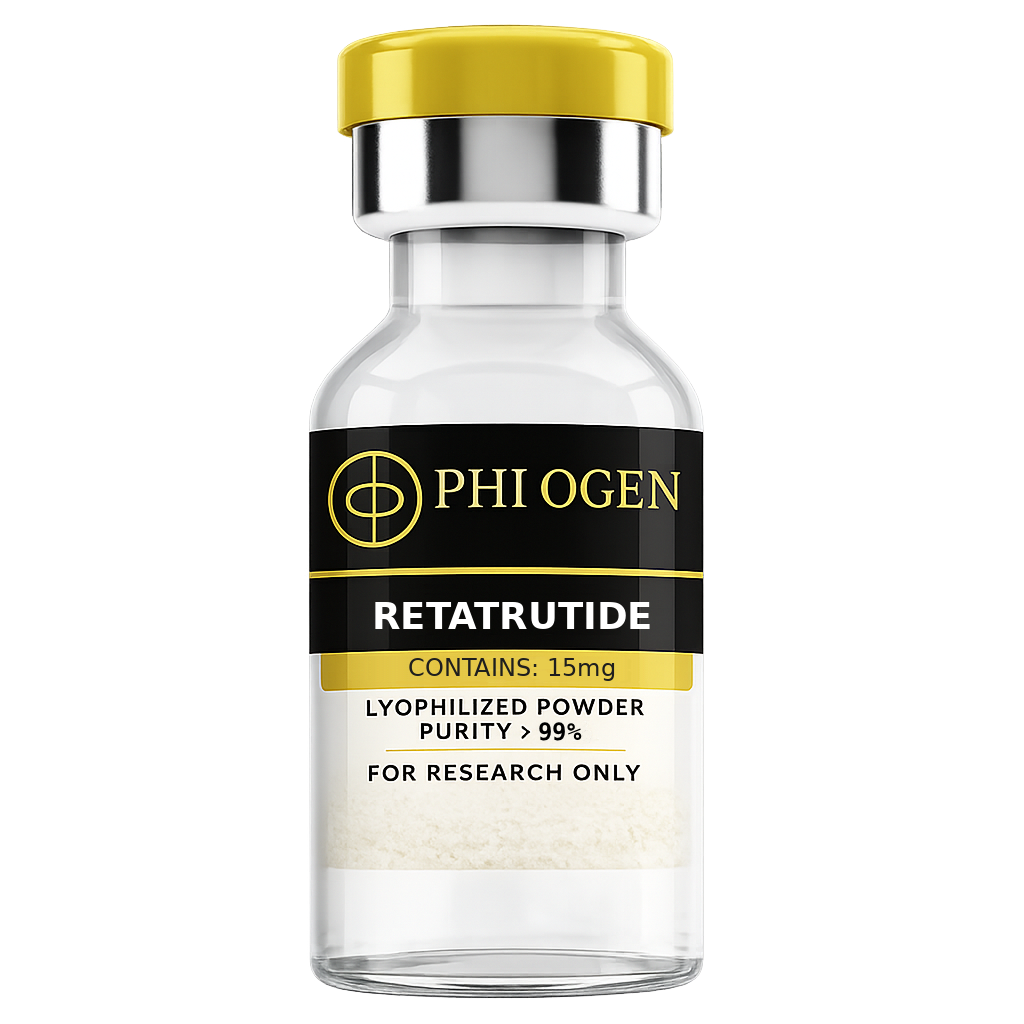
Retatrutide: Triple-Receptor Maximum
Receptor targets: GLP-1R + GIPR + GcgR (glucagon receptor)
Retatrutide adds GcgR to the dual-agonist framework. Glucagon receptor engagement creates mechanisms that operate independently of appetite and intake regulation:
- Hepatic beta-oxidation: GcgR in hepatocytes activates PPAR-alpha and fatty acid oxidation enzymes, directly burning hepatic lipid stores
- Brown adipose thermogenesis: GcgR in brown adipose tissue upregulates uncoupling protein 1 (UCP1) expression, increasing basal metabolic rate through adaptive thermogenesis
- Glycogenolysis: Hepatic glycogen mobilisation reduces substrate availability for de novo lipogenesis
Phase 2 (NCT05394519): 8 mg/week subcutaneous, 48 weeks — mean body weight reduction −28.7% (highest dose cohort) at a point where the dose-response had not plateaued (Jastreboff et al., NEJM 2023).
The Phase 3 program (NCT05882045) is ongoing. Phase 3 effect sizes typically compress relative to Phase 2, but the glucagon receptor mechanism is expected to maintain a meaningful advantage over dual-agonism.
Receptor Comparison Table
|---|---|---|---|---|---|
Dose Escalation Protocol
All GLP compounds require gradual titration to minimise GI side effects (nausea, vomiting, constipation). Standard escalation follows a 4-week interval between dose increases:
Semaglutide: 0.25 mg → 0.5 mg → 1.0 mg → 1.7 mg → 2.4 mg (maintenance)
Tirzepatide: 2.5 mg → 5 mg → 7.5 mg → 10 mg → 12.5 mg → 15 mg (maintenance)
Retatrutide: 2 mg → 4 mg → 8 mg (Phase 2 maximum; Phase 3 exploring higher doses)
Each dose step should be held for at least 4 weeks. If GI effects are not tolerated at a given step, extend the hold period before escalating rather than discontinuing the compound.
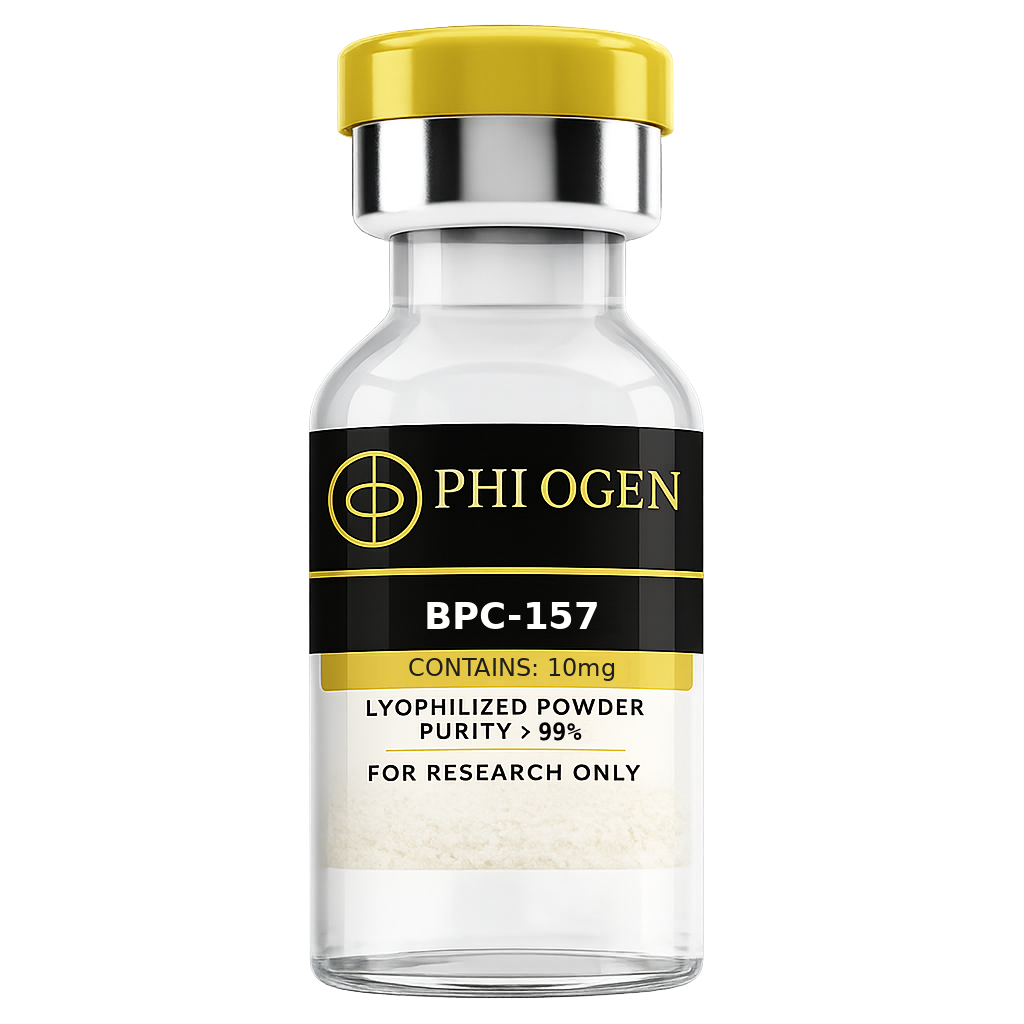
BPC-157 Co-Administration Rationale
GLP-1R agonism — present in all three compounds — causes nausea, delayed gastric emptying, and mucosal irritation in a significant proportion of subjects during dose escalation. The mechanism: GLP-1R in the gastric antrum and enteric nervous system slows motility; GLP-1R in the area postrema activates the vomiting reflex.
BPC-157's gastroprotective mechanisms are mechanistically complementary:
- NO system upregulation: Maintains mucosal blood flow and mucus secretion
- Tight junction restoration: Reduces mucosal permeability stress from delayed emptying
- VEGFR2-driven mucosal angiogenesis: Supports vascular integrity under GLP-induced motility stress
- NF-κB suppression: Reduces inflammatory component of mucosal irritation
The standard research practice is to initiate BPC-157 concurrently with the GLP compound and maintain it throughout the full protocol, not only during the escalation phase. This reflects both the ongoing mucosal stress of GLP agonism at maintenance doses and the extended recovery benefits from continued gastroprotective signalling.