Protocol Rationale
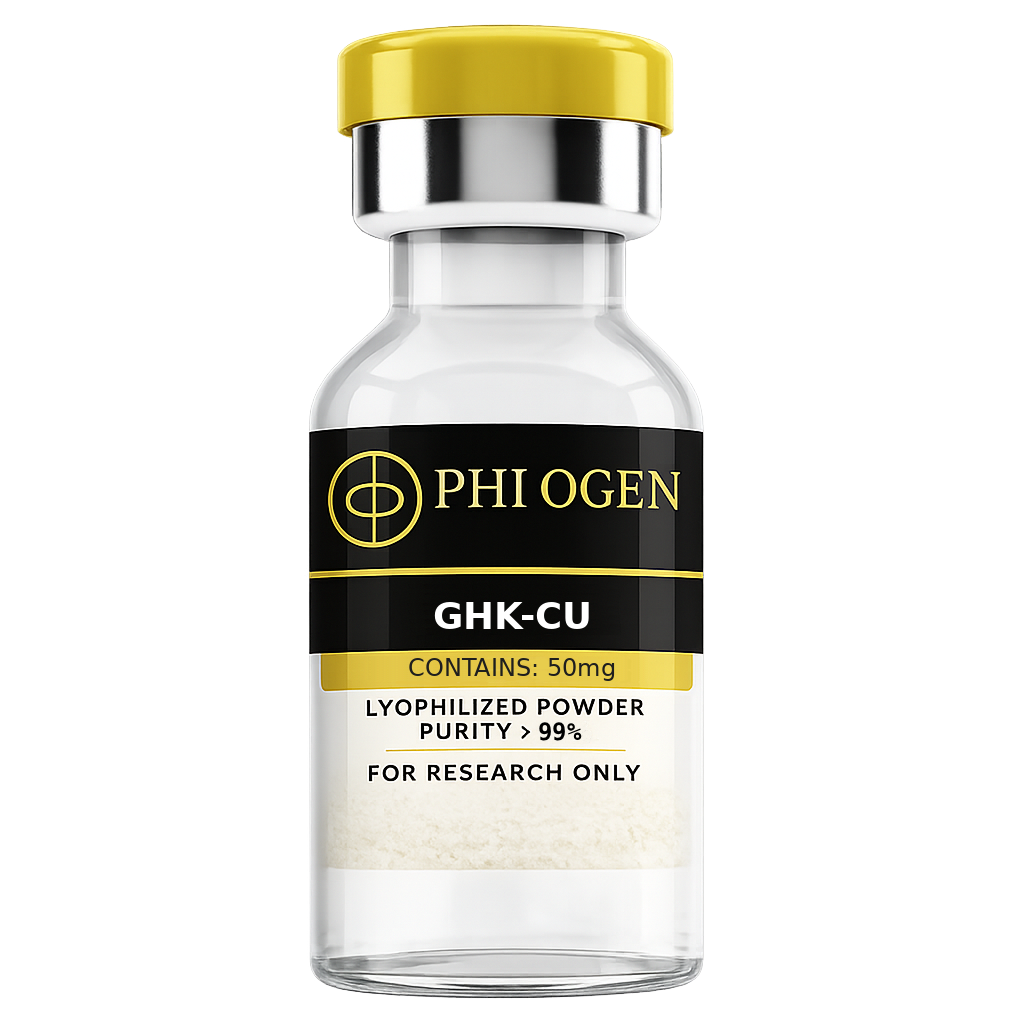
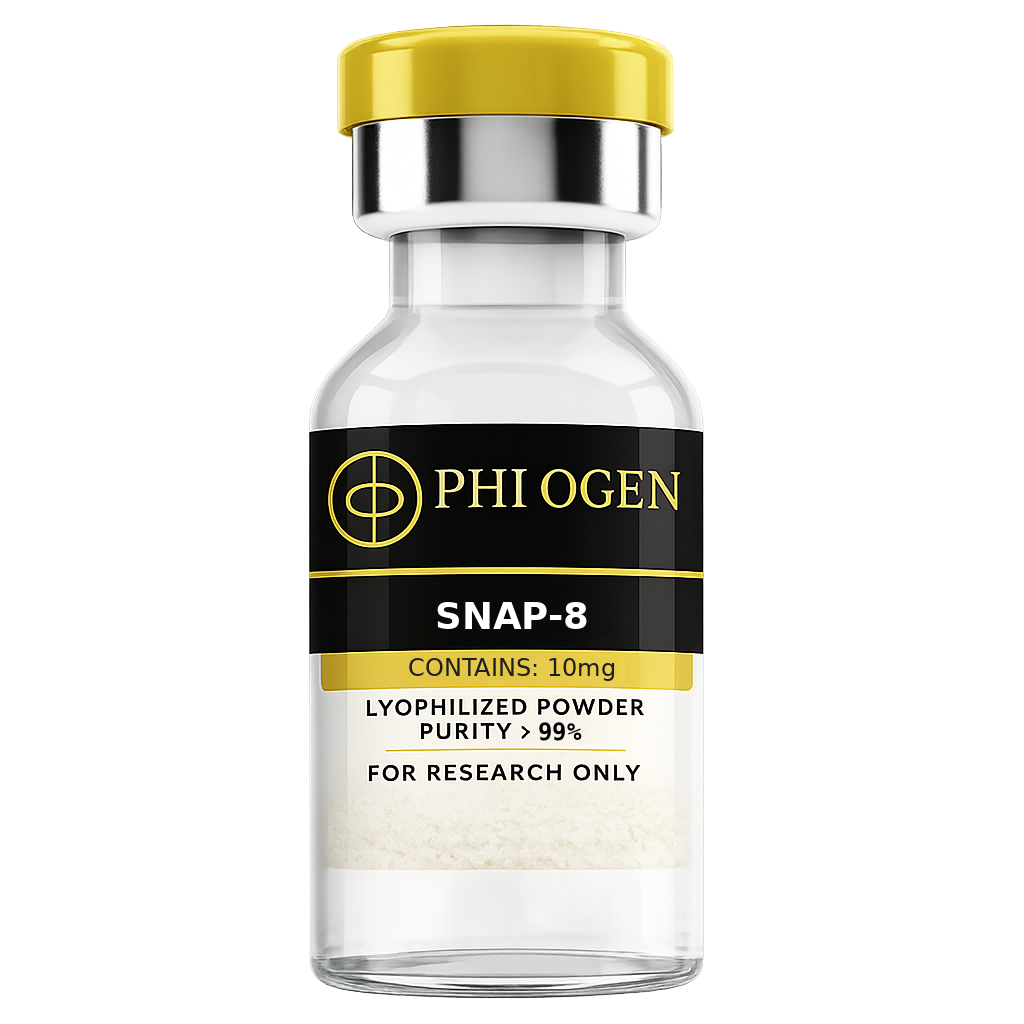
Aesthetic peptide protocols in the looksmaxxing research community converge on three compounds that address distinct biological targets without mechanistic overlap: GHK-Cu for dermal matrix quality, SNAP-8 for expression line depth, and Melanotan II for melanogenesis and body composition. Understanding each mechanism independently clarifies why they stack without redundancy.
GHK-Cu: The Dermal Matrix Signal
GHK-Cu (glycyl-L-histidyl-L-lysine copper complex) is an endogenous tripeptide with measurable plasma levels that decline approximately 60% between the third and seventh decade of life — from roughly 200 ng/mL at age 20 to 80 ng/mL at age 60 (Pickart and Margolina, 2018).
The 4,000-Gene Effect
The most cited dataset: a 2012 genomic analysis by Pickart and colleagues (subsequently referenced in Broad Institute pathway work) identified over 4,000 human genes modulated by GHK-Cu exposure. The directional pattern was consistent:
- Upregulated: collagen I synthesis (+70% in fibroblast models), collagen III (+50%), elastin, glycosaminoglycans, superoxide dismutase, catalase
- Downregulated: inflammatory cytokine expression, senescence-associated secretory phenotype (SASP) markers, genes associated with metastatic behaviour
The breadth of this effect is unusual for a tripeptide. Most growth factors operate through narrowly defined receptor pathways. GHK-Cu appears to act as a systemic tissue repair signal with simultaneous pro-repair and anti-senescence activity.
Wound Healing Evidence
Beyond collagen synthesis, GHK-Cu drives keratinocyte migration, stimulates angiogenesis via VEGF upregulation, and reduces post-injury inflammation. In dermal wound models, GHK-Cu-treated tissue shows accelerated re-epithelialisation and reduced scar formation compared to controls. This evidence base extends the compound's relevance beyond cosmetic applications into functional dermal repair.
Administration in Aesthetic Protocols
Topical application yields dermis-level concentrations adequate for gene modulation in the target tissue layer. Subcutaneous administration produces systemic exposure. Research protocols commonly use both routes concurrently — topical for localised skin quality, subcutaneous for systemic GH-adjacent effects on collagen turnover.
SNAP-8: SNARE Complex Inhibition
SNAP-8 (Acetyl Glutamyl Heptapeptide-1 / Acetyl Octapeptide-3) is a synthetic octapeptide that mimics the N-terminal region of SNAP-25 — a core component of the SNARE protein complex governing synaptic vesicle fusion and neurotransmitter release at neuromuscular junctions.
Mechanism of Action
At the neuromuscular junction, SNARE complex assembly drives acetylcholine release → muscle contraction. Expression lines (glabellar lines, forehead lines, crow's feet) deepen with repeated contraction of the underlying musculature over time. SNAP-8 competitively inhibits SNARE complex formation, partially reducing neurotransmitter release and dampening the muscle contraction amplitude responsible for mechanical crease formation.
In vitro wrinkle depth studies (ex vivo skin models): up to 63% reduction in wrinkle depth with SNAP-8 vs untreated control. The compound is described in cosmetic research literature as a topical neuropeptide alternative to botulinum toxin for expression line management, with a more localised, reversible, and dose-titratable effect profile.
Specificity and Target Sites
SNAP-8 is primarily used at:
- Glabellar frown lines (procerus and corrugator supercilii)
- Forehead horizontal lines (frontalis)
- Lateral canthal lines (orbicularis oculi)
The peptide works at the dermal-muscular interface and requires adequate penetration for topical efficacy — consistent with formulations using penetration enhancers or via microneedling-assisted delivery in aesthetic research protocols.
Melanotan II: MC Receptor Agonism
Melanotan II (MT-II) is a cyclic synthetic analogue of alpha-melanocyte-stimulating hormone (α-MSH), a neuropeptide derived from proopiomelanocortin (POMC) cleavage. It acts as a non-selective agonist across the melanocortin receptor family with differential potency:
| Location | Effect of MT-II Agonism | MC1R | Melanocytes, skin | Melanogenesis — melanin synthesis and dispersion |
| MC3R | Hypothalamus, periphery | Metabolic regulation, energy homeostasis | |
| MC4R | Hypothalamus | Appetite suppression, sexual arousal | |
| MC5R | Multiple peripheral tissues | Exocrine gland function |
| Primary Target | Mechanism | Aesthetic Outcome | GHK-Cu | Fibroblasts, gene regulation | 4,000+ gene modulation, collagen upregulation | Skin thickness, elasticity, firmness |
| SNAP-8 | Neuromuscular junctions | SNARE complex inhibition | Expression line depth reduction |
| Melanotan II | MC receptors (MC1R, MC4R) | cAMP-MITF-tyrosinase cascade | Skin tone, melanin density, appetite |